Why Starter Homes Are So Hard for Builders to Build Profitably
Rising construction costs and fixed expenses are making traditional starter homes increasingly difficult for builders to produce profitably, limiting affordable options for first-time buyers.
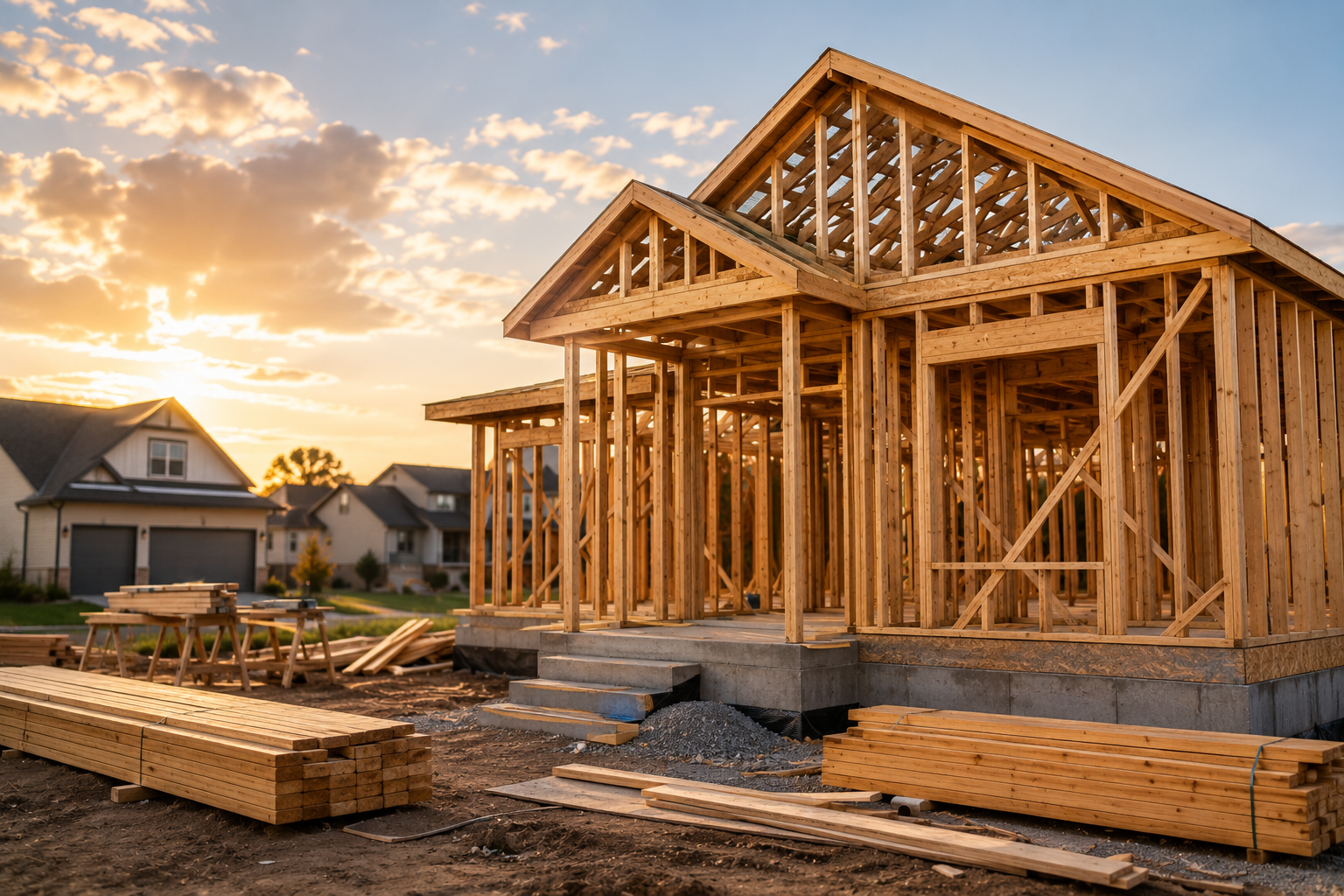
Starter homes have long been considered an entry point into homeownership, but building them has become increasingly difficult to make financially worthwhile.
Rising labor and material costs, contractor minimums, land expenses, and other fixed costs are squeezing builder margins—especially on smaller, lower-priced homes.
That helps explain why the supply of starter homes remains limited even as demand from first-time buyers stays strong.
Smaller Homes Don’t Always Mean Much Lower Costs
It might seem logical that a smaller house would be significantly cheaper to build. In reality, many construction expenses do not decrease much with square footage.
Electricians, plumbers, contractors, inspectors, and other professionals may charge minimum fees simply to take on a project.
A 1,000-square-foot home might require fewer materials than a 1,600-square-foot home, but both properties still need electrical systems, plumbing, HVAC equipment, kitchens, bathrooms, permits, utility connections, and other essentials.
As a result, builders can only reduce certain costs by making a home smaller.
Fixed Costs Put Pressure on Affordable Construction
Every new home comes with expenses that are largely unavoidable.
A smaller house still needs basic fixtures, appliances, utility connections, structural components, and building systems. Contractors may also have minimum project charges regardless of how small the property is.
Those costs make up a much larger percentage of the selling price on an affordable home than they would on a higher-priced property.
That leaves builders with less room for unexpected expenses and smaller potential profits.
Starter-Home Prices Have Increased
The definition of a starter home varies depending on the market, but these homes are generally smaller and priced below the area's typical home value.
Nationally, starter-home prices have risen considerably in recent years as construction costs and overall home values increased.
For buyers, that means the traditional idea of an inexpensive first home is becoming harder to find.
Builders face the opposite side of the same problem: They must keep the finished home's price low enough for entry-level buyers while still covering increasingly expensive construction costs.
Independent Builders Face Additional Challenges
Smaller and independent homebuilders can be particularly vulnerable to rising costs.
Large national builders may be able to purchase materials in bulk, negotiate discounted labor rates, develop multiple homes at once, and spread expenses across larger projects.
A builder completing only a handful of homes each year often does not have the same purchasing power.
That can make a relatively small increase in lumber, labor, financing, or subcontractor costs much more significant.
Profit Margins Can Become Extremely Thin
Building any home involves financial risk.
Construction can take months, and unexpected costs can appear throughout the process. Material prices can change, weather can cause delays, financing expenses can increase, and a completed property might take longer than expected to sell.
With a higher-priced home, builders generally have more room to absorb those costs.
On a starter home, even a modest unexpected expense can significantly reduce—or potentially eliminate—the builder's profit.
That financial reality can encourage builders to focus on larger or more expensive homes where the potential return is greater.
Buyers May Need to Adjust Expectations
Affordability is not only a question of construction costs. There is also tension between what buyers want and what can realistically be built at an entry-level price.
A truly affordable new starter home may need to be smaller, have simpler finishes, sit on a smaller lot, or be located farther from the most expensive neighborhoods.
Higher-density development, townhomes, smaller detached homes, and more basic finishes can all help reduce costs.
However, those trade-offs do not always match what buyers imagine when they think about purchasing a new home.
Why This Matters for the Housing Market
A shortage of starter homes can make it harder for first-time buyers to enter the market.
When fewer affordable new homes are built, buyers compete more heavily for the limited supply of lower-priced existing homes.
That can place additional pressure on prices and make the first step into homeownership more difficult.
Increasing the supply of starter homes will likely require a combination of lower construction costs, more efficient development, affordable land, flexible zoning, and buyer expectations that align with what builders can realistically produce.
The Bottom Line
Building a smaller home does not necessarily mean dramatically lower construction costs.
Many of the expenses involved in producing a new home remain relatively fixed regardless of square footage, leaving builders with much thinner margins on entry-level properties.
That helps explain why traditional starter homes have become increasingly difficult to produce profitably—and why affordable housing inventory remains such a challenge in many markets.