Florida Home Prices Rebound as Miami Sees 3.3% Growth
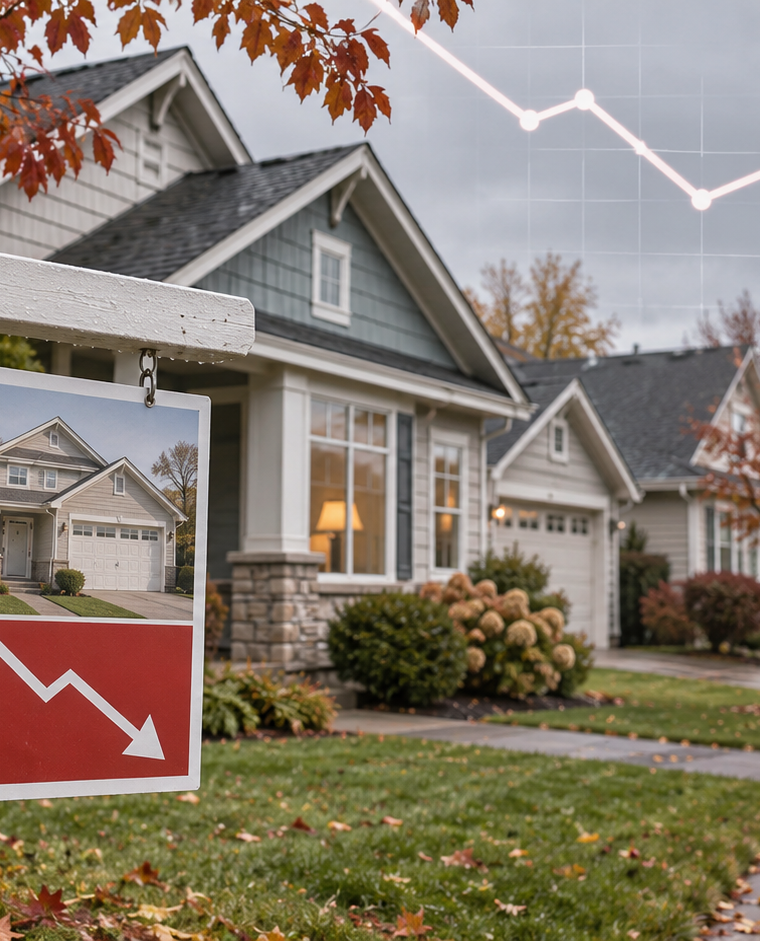
Florida's housing market is showing signs of recovery, with home prices rising in 18 of 19 tracked markets. Miami leads the rebound with 3.3% annual growth, outpacing the national average.

Florida's housing market is showing renewed strength after a period of slowing price growth and declining home values. According to the latest report from the National Association of Realtors (NAR), home prices increased across nearly every major Florida market during the third quarter of 2026, signaling a potential turnaround for the Sunshine State.
Miami emerged as one of the state's notable performers, recording a 3.3% annual increase in median home prices, nearly double the national growth rate.
The recovery comes as housing markets nationwide continue to adjust to affordability challenges, changing buyer demand, and evolving economic conditions.
Florida's Housing Market Shows Signs of Recovery
After experiencing declining prices in several markets throughout 2025, Florida is beginning to see renewed price appreciation.
According to NAR's third-quarter housing report, 18 of the 19 Florida metropolitan areas tracked experienced year-over-year increases in median existing single-family home prices. Tallahassee was the only market that recorded no annual growth.
The improvement represents a noticeable shift from the previous year, when several Florida markets struggled with slower sales activity and downward pressure on home prices.
NAR Chief Economist Lawrence Yun pointed to the state's recovery as an example of how housing market conditions can improve when supported by local economic strength.
Miami Leads Florida's Price Growth
Miami's housing market continues to demonstrate resilience, with median single-family home prices increasing 3.3% year over year during the third quarter.
That growth was nearly twice the national average of 1.7%, highlighting Miami's continued appeal within Florida's real estate market.
One factor supporting Florida's broader recovery has been activity in the luxury housing segment.
According to previous Realtor.com reporting, sales of properties priced above $1 million increased nearly 10% year over year in August 2026.
Strong demand for higher-priced properties has helped support market activity, particularly in areas known for luxury real estate and desirable coastal locations.
Home Prices Continue Rising Nationwide
Florida's rebound comes as home prices continue to increase across most of the United States.
According to NAR, 78% of metropolitan areas experienced annual home-price growth during the third quarter of 2026, slightly below the 80% recorded during the previous quarter.
The national median existing single-family home price reached $432,900, representing a 1.7% increase compared to the same period in 2025.
Although most markets recorded gains, the pace of appreciation varied significantly by region.
The Northeast experienced the strongest annual growth at 4%, bringing its median home price to $561,500. The Midwest followed with a 3.6% increase and a median price of $342,500.
The South recorded a more modest 1% increase, while the West experienced a 0.6% decline in median home prices.
These differences highlight the importance of evaluating local housing conditions rather than relying exclusively on national trends.
Which U.S. Cities Experienced the Biggest Price Increases?
While Florida showed widespread improvement, several cities outside the state recorded even stronger annual price appreciation.
Gulfport, Mississippi, led the nation with an 11% increase in median home prices, followed closely by Rochester, New York, at 10.9%, and Jackson, Mississippi, at 10.1%.
Other markets experiencing notable growth included Beaumont, Texas, at 9.9%, York, Pennsylvania, at 9.2%, and Grand Rapids, Michigan, at 8.7%.
Cleveland, Ohio, and Fort Wayne, Indiana, also recorded significant gains of 8.6% and 8.5%, respectively.
These increases demonstrate that housing demand and price growth remain strong in certain markets, even as affordability continues to challenge buyers nationwide.
What Rising Prices Mean for Buyers and Sellers
For Florida homeowners, renewed price appreciation may be an encouraging sign following the slower market conditions experienced in 2025.
Rising property values can help support homeowner equity and may give sellers greater confidence when preparing to list their properties.
For buyers, however, higher home prices continue to create affordability challenges, particularly when combined with mortgage payments, insurance expenses, and other homeownership costs.
While Florida's overall market is showing signs of improvement, individual cities and neighborhoods may experience different levels of demand, inventory, and price growth.
Buyers and sellers should carefully evaluate local market data before making real estate decisions.
Florida's Housing Market Outlook
The latest housing figures suggest that Florida's real estate market may be moving into a more stable period following several years of adjustment.
With 18 of 19 tracked metropolitan areas reporting annual price increases, the state's recovery appears to extend beyond Miami and other major coastal destinations.
However, affordability, inventory levels, mortgage rates, and local economic conditions will continue to influence future market performance.
As 2026 approaches its final months, Florida's renewed home-price growth offers an encouraging indication of resilience, even as the broader U.S. housing market continues to navigate economic uncertainty.
Source: Realtor.com, Home Prices Rebound in Florida as Miami Sees 3.3% Growth, by Snejana Farberov, published October 29, 2026.
Original Article: https://www.realtor.com/news/trends/home-prices-rising-miami-florida-nar-q3-2026/
Research: National Association of Realtors, Home Prices Increased in 78% of Metro Areas in Third Quarter of 2026, published October 29, 2026.
Research Report: https://www.nar.realtor/newsroom/home-prices-rise-78-percent-metro-areas-q3-2026