America Built Its Way Out of a Housing Crisis Before — Can We Do It Again?
After World War II, America responded to a major housing shortage with bold construction, new financing, and the rise of the starter home. Today’s affordability crisis may require a similar commitment to building more attainable housing.
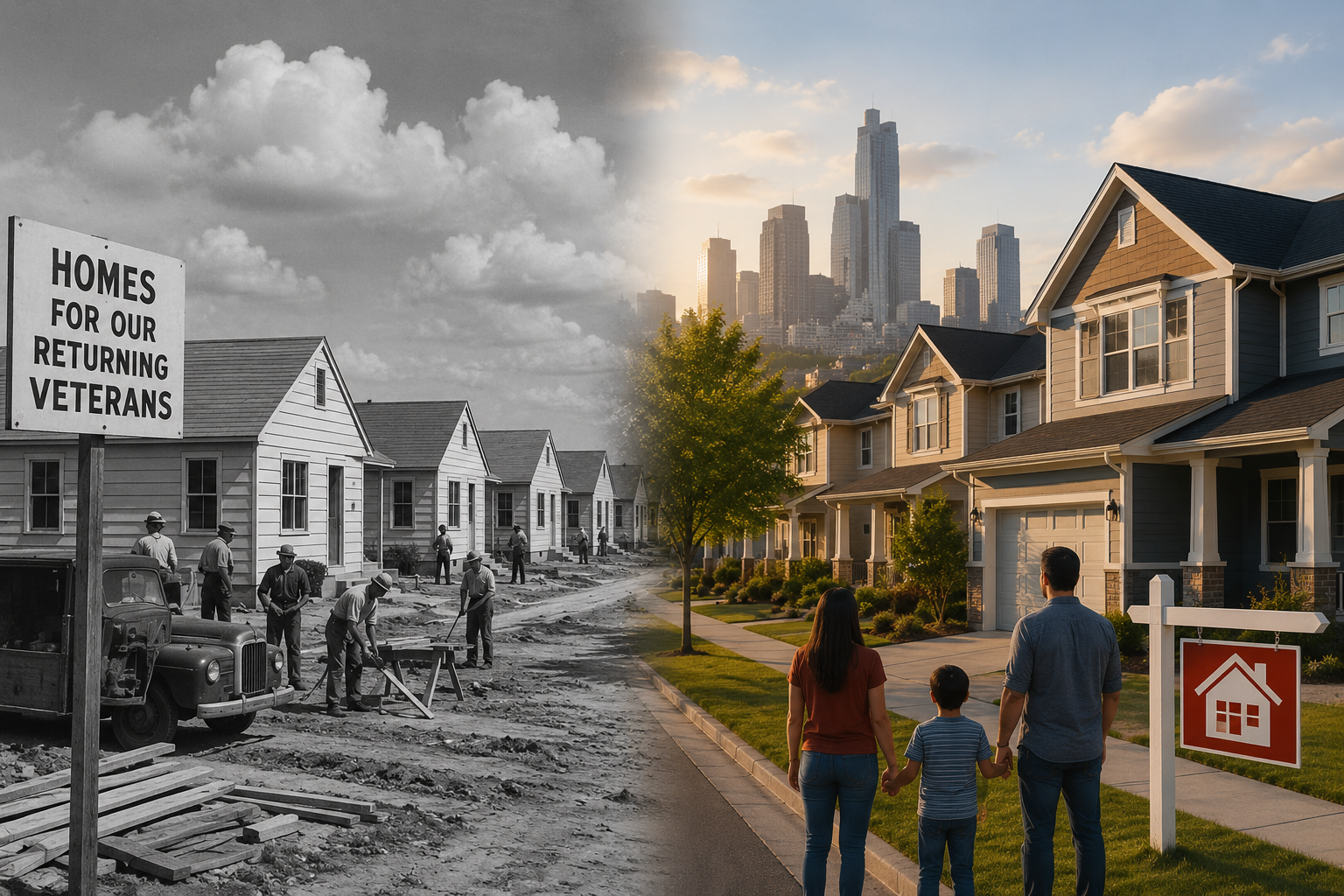
America Solved a Housing Shortage Before — Can We Do It Again?
Housing affordability feels like one of the biggest challenges facing buyers today.
Starter homes are harder to find. First-time buyers are entering the market later in life. Rents remain high. Mortgage rates have made monthly payments feel heavier. And across the country, there simply are not enough homes to meet demand.
But this is not the first time America has faced a housing crisis.
After World War II, millions of veterans returned home ready to build their lives. They wanted stability, families, neighborhoods, and the chance to own something of their own. Instead, many came back to a country that did not have enough housing for them.
The shortage was severe. Families were living in temporary spaces, trailers, crowded rooms, and makeshift shelters. It was a national problem that required a national response.
And eventually, America built.
That postwar building boom helped create the modern starter home, expanded homeownership, and shaped the idea of the American dream as many people still understand it today.
Now the question is: can we do it again?
Housing Is Not Just a Personal Problem
When people talk about housing affordability, it is often framed as an individual issue.
Buyers are told to save more. Renters are told to budget better. Homeowners are told to wait for the “right time” to move.
But the truth is bigger than that.
Housing is an economic issue. When people cannot find affordable places to live, it affects families, jobs, businesses, communities, and long-term wealth.
After World War II, leaders understood that housing construction was tied to the strength of the economy. Building homes meant creating jobs, supporting families, and helping the country transition into a new era.
Today, we need that same level of urgency.
A healthier housing market does not just help buyers. It helps entire communities function better.
Financing Alone Will Not Fix the Problem
One of the major reasons the postwar housing boom worked was because financing became more accessible.
Programs like the GI Bill helped many veterans purchase homes with better loan terms and lower barriers to entry. That opened the door to homeownership for millions of people.
Today, affordability is also tied to financing. Buyers are watching rates closely. Many homeowners are locked into low mortgage rates and hesitant to sell. Some proposed solutions, like longer mortgage terms or portable mortgages, are aimed at lowering monthly payments or helping people move more easily.
But here is the catch: easier financing only works if there are enough homes to buy.
If more buyers enter the market but inventory remains tight, prices can rise even faster. That is part of what happened during the pandemic, when low rates created huge demand in a market that was already short on homes.
So yes, financing matters. But supply matters just as much.
Buyers do not just need access to loans. They need access to actual housing.
The Starter Home Needs a Comeback
For generations, the starter home was the first step into ownership.
It was not always large. It was not always perfect. But it gave families a place to begin building equity and stability.
Today, that entry point has become much harder to reach.
In many markets, smaller and more affordable homes are limited. Builders often focus on larger homes because land, labor, materials, and permitting costs make smaller homes less profitable. That leaves first-time buyers competing for fewer affordable options.
If America wants to improve affordability, the starter home needs a modern comeback.
That may not look exactly like the postwar suburbs of the 1940s and 1950s. It may include townhomes, smaller single-family homes, accessory dwelling units, modular homes, manufactured homes, and more creative housing options.
The goal should not be one type of housing. The goal should be more attainable housing.
Innovation Has To Be Part Of The Solution
The postwar housing boom was not just about building more. It was about building differently.
Communities like Levittown became famous because builders used standardization and efficiency to produce homes faster and at a lower cost. It was a new approach for a new era.
Today, innovation could play a similar role.
Manufactured housing, modular construction, 3D-printed homes, accessory dwelling units, and zoning reform could all help create more options. These solutions may not solve the entire shortage on their own, but they can be part of a larger strategy.
The challenge is changing the way people think about housing.
Affordable does not have to mean low quality. Smaller does not have to mean undesirable. Standardized does not have to mean boring.
If we want more people to have a realistic path to homeownership, we may need to be more open-minded about what that first home looks like.
Building More Must Include Everyone
The postwar housing boom created wealth for many families, but it also left many others behind.
Discriminatory lending, exclusionary policies, and unequal access to homeownership prevented many Black families, renters, and lower-income households from benefiting from the same wealth-building opportunities.
That history matters because homeownership remains one of the most powerful ways Americans build long-term financial security.
A modern housing solution cannot simply recreate the past. It has to do better.
That means building more homes, but also creating more access. It means supporting first-time buyers, renters, veterans, working families, and communities that have historically been left out of the conversation.
Housing policy should not just be about restoring the American dream for some people. It should be about expanding stability and opportunity for more people.
What This Means For Today’s Buyers
For buyers, the current market can feel frustrating. Prices are high, inventory is limited, and affordability is tight.
But the bigger picture is important.
America has faced housing shortages before. Progress happened when the country treated housing as a serious priority, not just a personal budgeting problem.
For today’s buyers, that means staying informed, being realistic, and working with professionals who understand both the market and the opportunities that still exist.
The right home may look different than expected. It may require flexibility on location, property type, size, or timing. But with the right guidance, buyers can still make smart moves.
The Bottom Line
The postwar housing boom reminds us that housing crises are not permanent. They can be solved when supply, financing, innovation, and access all work together.
Today’s housing market needs more than quick fixes. It needs a serious commitment to building more homes, creating more attainable options, and making sure the path to stability is open to more people.
At Kap Rate Living, we believe buyers and homeowners deserve more than headlines. They deserve clear guidance, honest conversations, and a team that understands how important homeownership still is.
If you are thinking about buying, selling, or planning your next move, visit kaprateliving.com to connect with Kap Rate Living.
Inspired by reporting from Realtor.com.