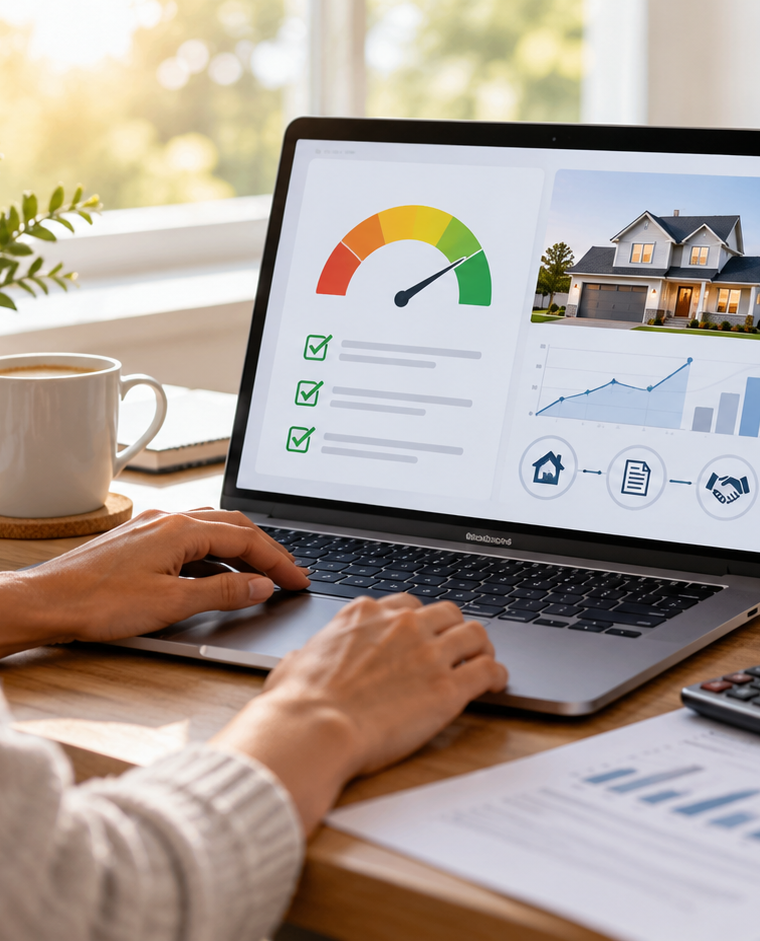
How AI Is Changing the Way Homebuyers Search for Homes in 2026
Artificial intelligence is transforming the homebuying experience, helping buyers compare properties, analyze costs, and narrow their searches. Discover how AI is reshaping real estate and why local agents remain essential to finding the right home.

October 2026 | Kap Rate Living
Artificial intelligence is changing how people search for homes, compare properties, and prepare for one of life's biggest financial decisions.
From narrowing down listings to estimating housing costs, AI-powered tools are becoming part of the modern homebuying experience.
But while technology can simplify the search process, it doesn't eliminate the need for professional real estate guidance.
Recent reporting from Florida Realtors® highlights how buyers are using artificial intelligence to make their home searches more efficient, while experienced agents continue to provide the local knowledge and personal insight technology cannot fully replace.
More Homebuyers Are Turning to Artificial Intelligence
The traditional home search has evolved far beyond browsing listings and attending open houses.
Today's buyers have access to digital tools that can help them evaluate properties, organize information, and identify homes that match their preferences.
According to a July 2026 Bright MLS survey referenced by Florida Realtors, nearly 40% of prospective homebuyers said they would be fully comfortable using AI alone to search for a property.
This growing interest suggests that buyers are becoming more comfortable incorporating technology into their real estate decisions.
However, many still value having a knowledgeable professional review the information and help guide them through the process.
AI may make searching easier, but buying a home involves decisions that extend well beyond what an algorithm can calculate.
How AI Can Simplify the Home Search Process
One of the biggest advantages of artificial intelligence is its ability to organize and analyze information quickly.
Instead of manually reviewing dozens of property listings, buyers can use AI tools to narrow their search based on specific needs.
For example, a buyer might be looking for a four-bedroom home in Wesley Chapel with a home office, a spacious backyard, and a particular price range.
AI-powered tools can help organize those preferences and identify properties that appear to meet the criteria.
These tools may also help buyers compare square footage, property features, estimated housing expenses, and other relevant information.
By simplifying the initial research process, AI can help buyers spend less time sorting through unsuitable properties and more time focusing on homes worth exploring.
However, the accuracy of these results depends on the quality and freshness of the information available to the technology.
AI Can Help Buyers Understand Housing Affordability
Affordability remains one of the most important considerations for prospective homeowners.
AI tools can assist buyers by organizing financial information and exploring different purchasing scenarios.
For example, buyers may use AI-assisted calculations to estimate how different down payments, mortgage rates, or property prices could affect their monthly housing expenses.
Technology can also help explain mortgage terminology, compare financing scenarios, and identify questions to ask a lender.
These features can be particularly helpful for first-time homebuyers who are unfamiliar with the financing process.
However, AI-generated estimates should not be treated as mortgage approvals or guaranteed financing terms.
Actual borrowing costs depend on factors such as credit history, income, loan programs, property taxes, insurance, and lender requirements.
A qualified mortgage professional remains essential for accurate financing guidance.
Buyers Are Using AI to Review Property Information
Artificial intelligence is also becoming a tool for reviewing complex real estate information.
Homebuyers may use AI to help summarize inspection reports, compare property descriptions, or better understand unfamiliar terminology.
For example, an inspection report might contain detailed information about roofing, plumbing, electrical systems, and other property components.
AI can help organize those findings into a more understandable format, making it easier for buyers to prepare questions for their inspector or real estate agent.
However, automated summaries can omit important details or misinterpret technical information.
Buyers should always review original reports and consult qualified professionals before making decisions involving repairs, property conditions, or contractual obligations.
AI can support the learning process, but it cannot replace professional property evaluations.
Why Real Estate Agents Still Matter in an AI-Powered Market
While technology can process large amounts of information, real estate decisions often involve factors that are difficult to measure.
An AI tool might identify a property that matches a buyer's preferred square footage and price range.
However, it may not fully capture the home's condition, the surrounding community, neighborhood characteristics, or other factors that influence a buyer's experience.
Experienced real estate agents can help provide context that goes beyond listing information.
They can explain local market conditions, coordinate showings, assist with negotiations, and guide clients through important transaction milestones.
They can also help buyers verify information generated by AI tools.
This combination of technology and professional expertise can create a more informed and efficient homebuying experience.
AI Isn't Always Accurate: What Buyers Should Know
Despite its capabilities, artificial intelligence has limitations.
One of the biggest concerns involves outdated or incomplete property information.
An AI tool may reference a home that has already sold, provide an inaccurate listing price, or overlook important property details.
It may also generate confident explanations that contain factual errors.
For buyers, relying entirely on this information could lead to unrealistic expectations or poor purchasing decisions.
Before acting on AI-generated recommendations, it's important to verify listing availability, property details, association restrictions, and other material information through reliable sources.
Real estate professionals with access to current listing data and local market information can help buyers separate useful insights from potentially misleading results.
How Real Estate Agents Are Using AI to Better Serve Clients
Artificial intelligence isn't only changing the consumer experience. It's also influencing how real estate professionals manage their work.
Agents are increasingly exploring tools that can help organize client preferences, summarize communications, and identify properties that align with buyers' needs.
For example, technology may help an agent better understand which features matter most to a client before scheduling showings.
AI-assisted workflows can also support administrative tasks, allowing agents to dedicate more time to client relationships, property research, and negotiations.
When used responsibly, these tools can complement an agent's expertise rather than replace it.
The goal is to make the real estate process more efficient while maintaining the personalized service buyers and sellers expect.
What This Means for Florida Homebuyers
For buyers exploring communities such as Tampa, Wesley Chapel, Land O' Lakes, and surrounding Florida markets, AI can provide a helpful starting point.
Technology can make it easier to compare properties, organize priorities, and explore different housing scenarios.
However, local factors remain critical when evaluating a property.
Flood zones, homeowners insurance, property taxes, community association fees, and neighborhood market conditions can significantly influence the overall cost and suitability of a home.
These details require reliable, current information and careful review.
A knowledgeable local real estate professional can help buyers evaluate properties in the context of their individual goals and financial circumstances.
The Future of Homebuying: Technology and Human Expertise Working Together
Artificial intelligence will likely continue to influence how buyers discover and evaluate real estate.
As tools become more sophisticated, property searches may become increasingly personalized, allowing buyers to organize information and identify potential opportunities more efficiently.
However, the homebuying process involves much more than finding a matching listing.
It requires understanding contracts, evaluating property conditions, managing deadlines, negotiating terms, and making decisions with long-term financial implications.
Technology can support these steps, but professional expertise remains an important part of navigating them successfully.
The future of real estate may not be a choice between artificial intelligence and real estate agents. Instead, it may involve combining the efficiency of technology with the judgment, relationships, and local knowledge of experienced professionals.
At Kap Rate Living, we believe technology should make real estate simpler, smarter, and more accessible without losing the personal connection that matters most.
Whether you're starting your home search, comparing properties, or preparing to make an offer, our team is here to help you make confident, informed decisions.
Ready to explore homes in Florida? Connect with Kap Rate Living today and discover how a technology-forward approach and personalized real estate guidance can help you find the right home.
Sources
Florida Realtors®
Home Buyers Turn to AI to Help With Their Search
By Amy Connolly | October 12, 2026
Read the original Florida Realtors article
Original Reporting: The Washington Post
By Barbara Ruben | September 19, 2026
Survey Referenced: Bright MLS, July 2026 survey examining consumer attitudes toward artificial intelligence in the homebuying process.
Survey results reflect respondents' reported comfort with AI and do not establish that the same percentage currently uses AI to search for homes.
© 2026 Kap Rate Living. Original educational commentary informed by publicly available real estate industry reporting.